To go back to the Preaching Home Page Click Here.

WHY MAN IS MORTAL?

THE CLEAR TEACHING OF THE BIBLE ON THE FALLEN CONDITION OF MANKIND AND GOD'S JOYOUS OFFER OF IMMORTALITY

MANY religious people believe that they possess a "spark of the divine entity" called the immortal soul. They do so without carefully considering just what the Bible declares about this personal and important matter. And, unfortunately, such an attitude will deny them the benefits of God's great gift for faithful men and women: a future hope of immortality at the coming of His Son, the Lord Jesus Christ.

Nowhere in the Bible are the words "immortal soul" found together. The two words are not even found in the same verse. Never does the Bible suggest that a person continues to live after the death of the body. To declare that there is an immortal essence resident within every individual is to make God's words ineffective and His teachings illogical. It would make the reason for the physical resurrection of the body, in which Paul believed and set his hope, completely unnecessary.

Instead, the Bible's offer of immortality at the coming of Jesus Christ, as revealed in the following article, is logical, reasonable, and completely satisfying.


The doctrine of the immortality of the soul is one of the most ancient religious and philosophical beliefs of mankind. According to many theological and secular historians, this belief in a form of spirit-existence which continues to live on after the death of the body dates from very early times. The origins of this belief are rooted in man's desperate endeavors to deny the absolute reality of death, in the hope that life will continue in some form or other after the physical body has proven its mortality by falling into the article of death and corruption.


Some Notable Ideas of the World's Philosophers

Plato, who lived about 427-347BC, has been regarded as one of the most important thinkers and writers in the history of Western culture". He was a philosopher and an educator, but all his so -called "wisdom" was the product of his own mind, supported by ideas and philosophies adopted from the teachings of others. His influence on both religious and philosophical thought was consid erable and widespread, even today.

Plato's concept of the immortal soul embraced the idea of reincarnation, for he taught that the soul left the body and migrated to what he termed the "realm of the pure forms" from which, after a time, the soul returned to the earth in another form.

Although Plato's influence in this field of philosophy profoundly affected the thinking of many upon the subject, the belief in the immortality of the soul can actually be traced right back to the days of Nimrod, about 2OOOBC (Genesis 10; see The Two Babylons by Alexander Hislop), and later embraced by the Egyptians and Babylonians.


Man's Philosophy Opposes God's Truth

Yet this doctrine of the immortality of the soul is not contained within the pages of the Bible, God's inspired and infallible Word. As the only source of divinely-inspired knowledge (l Thessalonians 2:13; Hebrews 1:1; 2 Peter 1:21; Isaiah 8:20, etc.), the Bible must be consulted if the truth of the matter is to be discovered. The Great Creator of all things requires us to earnestly consider His revelation, and to ascertain the truth concerning this important subject.

Of Himself, He declares: "Is there a God beside me? Yea, there is no God; I know not any... I am the LORD (Hebrew: Yahweh), and there is none else!" (Isaiah 44:8; 45:18).

But how did God create man? Did the Creator implant within mankind a "divine something", usually referred to as an eternal "spark of life"; but commonly known as an immortal soul?

The Bible tells us in simple, easy to understand terms, how the first man was created: "And the LORD God formed man of the dust of the ground, and breathed into his nostrils the breath of life; and man became a living soul" (Genesis 2:7). The first part of this verse teaches that man was formed, or shaped, from the earth. This revelation concerning man's physical origin is reiterated after the moment when sin entered into the world and mankind was condemned to death. God then said: "In the sweat of thy face shalt thou cat bread, till thou return unto the ground; for out of it wast thou taken: for dust thou art, and unto dust shalt thou return " (Genesis 3:19).

When Adam's physical shape had been originally formed, God "breathed into his nostrils the breath of life; and man became a living soul" (Genesis 2:7). Nothing in these words indicates that man was created with an immortal soul. Adam was merely created a living "soul". He was energized by "the breath of life " - not the "breath of everlasting life".

There is nothing in the word "breath" to imply some kind of mysterious divine essence, guarantee ing continuation of life after the death of the body. In fact, the very opposite is taught. After the flood in the days of Noah, the Bible states that, apart from the humans and animals who were saved within the Ark, "all flesh died that moved upon the earth, both of fowl and of cattle, and of beast, and of every creeping thing that creepeth upon the earth, and every man: all in whose nostrils was the breath of life" (Genesis 7:21-22). This phrase is from the same Hebrew word as occurs in Genesis 2:7 mentioned above in relation to the creation of man.

When the people of Israel went to war against their enemies in the land of Canaan, they were instructed by God to "save alive nothing that breatheth" (Deuteronomy 20:16). This word is often used in the Bible in relation to destruction; that is, the withdrawal of the "breath" that gave life, thus leaving the creature in a lifeless state. In fact, in some passages the same word has been rendered as "blast", in regard to destroying. For example, of the wicked it is said: "By the blast of God they perish" (Job 4:9). This is simply stating that though God has given mankind life at creation or at birth, He has the power to withdraw the principle which gives and maintains life: the "breath of life" - physical life, not immortal life.


The Danger of Speculation

Most religious people believe that there is no finality in death; that physical death is merely the automatic gateway to a "new" life - a life that is more enduring than the present existence; an eternal survival in some kind of "spirit world", either in heaven or elsewhere.

But this belief provides no satisfactory answers.

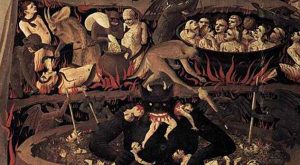
For instance, some would place "evil souls" in a place called Hell. But where is it? What sort of place is it? What happens there? Many and varied explanations are offered in attempting to answer these questions. Failing to find evidence in the Bible of a place for the repose for "immortal souls", the imagination of man takes over. Pictures are produced of souls roasting in fires, or being prodded on the uncomfortable ends of pitchforks; their horrific screams resounding throughout "hell" for all eternity.

On the other hand, "good souls" are depicted as sitting around on clouds, complete with white garments and haloes, happily strumming endlessly upon harps - a totally pointless and unsatisfying way to spend eternity. These speculative concepts of the destiny of souls are not only imaginative, but without any support from the teaching of the Creator's Word, the Bible.

The Bible does not deal in speculation, on this or any other subject. It offers no hazardous uncer tainties; it is a revelation of the voice of God, designed to convey to humankind all it needs to know concerning God and man, and the divine purpose with the earth. Therefore it speaks clearly and

informatively upon the question of how man is constituted, what will become of him, and what he may become.

Consider the words of God's servant, Job, concerning that which would have happened to him in death: "For now should I have lain still and been quiet, I should have slept: then had I been at rest, with kings and counselors of the earth, which built desolate places for themselves; or with princes that had gold, who filled their houses with silver: Or as an hidden or untimely birth I had not been; as infants which never saw life. There the wicked cease from troubling; and there the weary are at rest. There the prisoners rest together; they hear not the voice of the oppressor. The small and great are there; and the servant is free from his master" (Job 3:13-19).

Here is a clear account concerning the condition of mankind in death. Does it suggest that physi cal death is "the beginning of a new existence" outside the body? Rather, the very opposite: that man, in death, knows nothing; he is at rest and at peace, having ceased totally to exist.

Thus, as we will demonstrate, the doctrine of the immortality of the soul is not taught within the pages of the Bible. It is a philosophy which owes it origin entirely to pagan mythology, and finds no part in the faith of the ancient Hebrews; nor is it taught by Christ and his apostles in the New Testa ment Scriptures.


The Word Translated "Soul"

What, then of the word "soul"?

As it appears in the Bible, the word is rendered from the Hebrew nephesh. Hebrew scholars tell us that the word simply means "life, living, a breathing creature." It is derived from a root word nephesh, which means "to take breath; to refresh oneself." Neither of these words has the slightest association with anything "immortal". In fact, the words "immortal" and "soul" never occur in the Bible together, nor even in relation to one another! Surely this fact must be of great significance in understanding the meaning of these important words, and the Biblical teaching concerning their usage.


How The Words Are Used

In his well-known and respected Hebrew Lexicon, Parkhurst has written: "As a noun, nephesh hath been supposed to signify the spiritual part of man, or, what we commonly call his soul; I must, for myself, confess that I can find no passage where it hath undoubtedly this meaning." In revealing his conscience upon this subject, Parkhurst is consistent with the teaching of Scripture.

The word nephesh occurs 754 times in the Old Testament. In 326 places the "soul" is said to be subject to death; in 203 places it is said to be in danger of death; and in 123 places it is said to be delivered from death. In the New Testament, the equivalent Greek word, psuche, occurs 106 times. In 45 places it is said to be subject to death; in 29 places it is said to be in danger of death; and in 16 places it is said to be delivered from death.

Therefore, upon the basis of Biblical teaching, the "soul" could never be described as being "immortal". Notice the points listed in the panel below.


God's Commandment in the Garden

Seeing that the Bible teaches that man does not have an immortal soul, the question we must answer, is: Why did the first man and woman die, and why is it that all their progeny have been faced with the same end?


================================================================

The Capabilities of the Soul as Mentioned in the Bible


The word "soul" is used variously in Scripture to describe the actual person, the mind, disposition, life - subject to the principle of mortality. The word is from the Hebrew nephesh in the Old Testament, and the Greek psuche in the New Testament.

Some of its usages indicate that the soul:

* Is born: Genesis 46:18, 27. * Can eat: Exodus 12:16 (note margin); Deuteronomy 12:20; Leviticus 17:10-12; Luke 12:19. * Eats bread : Hosea 9:4. * Must die: Psalm 22:29. * Has a mouth: Psalm 103:2-5. * Has lips: Leviticus 5:4. * Has blood: Jeremiah 2:34. * Can thirst: Psalm 42:2. * Can be idle: Proverbs 19:15. * Weeps : Jeremiah 13:17. * Can touch: Leviticus 5:2. * Can be touched: Numbers 19:11 (margin). * Can die: Joshua 11:11; Ezekiel 18:4. * Can be smitten with the sword: Joshua 11:11 , and pierced: Luke 2:35. * Can be put in a pit: Job 33:18; Isaiah 38:17. * Goes into the grave: Psalm 86:13; 56:13. * Needs redemption: Psalm 49:15. * Needs a resurrection: Psalm 89:48; 49:15.

Thus the Bible clearly teaches that man is mortal; that his existence is limited (Psalm 144:3-4), and is destined to death ( Psa in 89:48). His only hope of a future existence is through a resurrection (1 Corinthians 15:50), and a change to divine nature by the miraculous and singular work of Jesus Christ (Philippians 3:2 1) when he returns from heaven.

=============================================================


In the beginning when the creation of all things had been completed, God pronounced His work as being "very good" (Genesis 1:31). This means He could discern no blemish in the creative work which had been accomplished. And this divine verdict included Adam and Eve. However, it should be borne in mind that, at this stage, Adam and Eve were neither mortal nor were they immortal. They certainly could not have been in the latter state, for had that been so, they would still be alive today! And so far as mortality was concerned, the apostle Paul explicitly states that man became mortal because of sin (Romans 5:12), and since Adam had not, to this time, committed any trans gression, it cannot be said that he was actually created as a dying, or death-stricken, creature. How, then, did Adam and Eve become condemned to death?

The Garden of Eden contained two trees of enormous significance. One was the Tree of Life or, literally, A Tree of the Lives. This was a tree which produced a miraculous fruit which, if partaken of by Adam and Eve, could have conferred upon them eternal life. Initially, however, they were igno rant of the existence of this tree (Genesis 3:22-23).

The other tree bore a fruit which could negate their state of innocence or sinlessness. It was termed the Tree of Knowledge of Good and Evil (Genesis 2:9). God commanded Adam and Eve that they were forbidden to partake of the fruit of this tree on pain of death. God told them: "Of every tree of the garden thou mayest freely eat; but of the Tree of the Knowledge of Good and Evil thou shalt not eat of it: for in the day that thou eatest thereof thou shalt surely die" (Genesis 2:16-17).

Why Did Adam and Eve Die?

The words rendered "thou shalt surely die" promised death as the punishment for breaking God's law. It is important to understand the significance of this fact. The New Testament clearly states that "sin is the transgression of the law", that is: "sin is lawlessness". These words refer to disobedience against God's law, which results in "sin" (l John 3:4). And, crucially: "The wages of sin is death" (Romans 6:23).

Under the influence of a serpent which was able to speak concerning its observations in the Gar den of Eden, Adam and Eve defied God and broke His law. For this act of infamy they not only came under the penalty of death, but discovered that their nature was now subject to all the weak nesses and corrupting elements which lead inevitably to death - a condition of nature, quite apart

from actual transgressions, which passed through to all their progeny (Romans 5:12).

In view of the fact that Adam lived for 930 years (Genesis 5:5), the sentence of death obviously did not have immediate effect. The words can be correctly rendered as in the margin of the Bible (AV): "dying thou shalt die" (Genesis 2:17). Ultimately Adam and Eve did die. Since they had been condemned to death, they now possessed a nature that was condemned to die. In this regard, Job posed and answered a key question: "Who can bring a clean thing out of an unclean? Not one! " (Job 14:4). Hence, Paul speaks of "the sentence of death in ourselves " (2 Corinthians 1:9), having earlier described the death-stricken nature we all bear, which leads humanity to the grave. He stated that we all possess a physical body which is defined as "in corruption... in dishonor... in weakness... a natural body..." (1 Corinthians 15:42-44). The fact is that all humanity is in a state of mortality.


Proof of the Mortality of Mankind

This word "mortality" defines the state of the entire individual; it means that mankind is wholly, totally mortal. There is no "spark" or "essence" of immortality within the individual which contin ues to live on after the physical body has passed into the article of death. At death, the entire person ceases to exist.

This state is graphically depicted in Genesis ch. 5 which reads like an ode to death. Again and again the mortality of man is stressed as one name after another appears, with the comment: "And he died..." (v. 5); "And he died..." (v. 8); "And he died..." (v. 11); "And he died..." (v. 14); "And he died..." (v. 17); "And he died..." (v. 20); "And he died..." (v. 27); "And he died..." (v. 31). The first five chapters of Genesis covers a period of more than 1,600 years, and therefore the sin-prone, death-stricken state of the human race is appropriately emphasized.

We suggest that the reader examine the following passages of Scripture: "The soul that sinneth, it shall die" (Ezekiel 18:4). "He spareth not their soul from death" (Psalm 78:50). "What man is he that liveth, and shall not see death? Shall he deliver his soul from the hand of the grave?" (Psalm 89:48). "None shall keep alive his soul" (Psalm 22:29). "He poureth out his soul unto death" (Isaiah 53:12). "My soul is exceeding sorrowful unto death" (Mark 14:34). "Every living soul died in the sea" (Revelation 16:3).

From these few direct references, it is readily established that the word "soul" is associated with death, or limitation of life, rather than eternity. Even though the phrase "immortal soul" never once occurs within the pages of the Bible, it has become a conventional phrase in the every-day language of most religious people.

But it is the truth of the matter that is important; not unproven terminology even if it is accepted and popular.

The Death State

Death is a reality in every sense of the term. It is a state in which the "breath of life" has been withdrawn, and the creature no longer has any existence whatever. It means a complete and total cessation of life.

This is clearly taught in the following passages of Scripture. Notice carefully the emphasis on the state of death:

* "In death there is no remembrance of Thee (God): in the grave who shall give Thee thanks?" (Psalm 6:5). * "The dead praise not the LORD, neither any that go down into silence" (Psalm 115:17). * "His (mankind's) breath goeth forth, he returned to his earth; in that very day his thoughts perish" (Psalm 146:4). * "The grave cannot praise Thee (God), death cannot celebrate Thee: they that go down into the pit cannot hope for Thy truth" (Isaiah 38:18). * "Whatsoever thy hand findeth to do, do it with thy might; for there is no work, nor device, nor knowledge, nor wisdom, in the grave, whither thou goest" (Ecclesiastes 9:10). * "For God so loved the world, that He gave His only

begotten Son, that whosoever believeth in him should not perish, but have everlasting life" (John 3:16).

Notice, particularly, that last quotation. It teaches that believers would "perish" were it not for the hope which God has extended through Christ. This reasoning is reiterated by Paul: "If Christ be not raised, your faith is vain; ye are yet in your sins. Then they also which are fallen asleep in Christ are perished" (1 Corinthians 15:17-18). Paul quite clearly shows that if Christ's physical resurrection was not an accomplished reality, even his dead disciples, who had exercised faith in his saving power, must have "perished" - i.e., become totally annihilated, without hope. Only the certainty of Christ's resurrection could assure their own ultimate salvation.

As we have demonstrated, many passages in the Bible testify to the total mortality of man. How ever, in addition to the Scriptural evidence already presented in this article, one passage of Scripture is exceptionally clear in summarizing the matter.

We earlier referred to the two special trees that God had placed in the Garden of Eden. After they had partaken of the fruit of the Tree of Knowledge of Good and Evil, Adam and Eve became two convicted sinners, with the ability to reproduce their kind: beings that sin. What was God to do under these circumstances? If He permitted them to eat of the fruit of the Tree of Life - a tree which could confer immortality upon eating its fruit - the world would have become populated with a race of immortal sinners! To prevent such a catastrophe from occurring God took a positive course of action. "And the LORD God said, Behold, the man has become as one of us, to know good and evil: and now, lest he put forth his hand, and take also of the tree of life, and live for ever: Therefore the LORD God sent him forth from the garden of Eden" (Genesis 3:22-23). These words show clearly that man was totally mortal, and that God took preventative action to avert him from becoming immortal!

Surely, we cannot mistake the clear teaching of the Bible upon this most vital subject. It is im perative to understand that we are death-stricken, mortal creatures, in every sense of the term; and therefore we have no inherent right to immortality. Rather, we are totally dependent upon the grace and mercy of the One who created us, and gave us life and breath - but who has not yet granted immortality to any of Adam's race, save only to the Lord Jesus Christ.

The teaching of the Bible is explicit and uncomplicated. At death, human beings cease to exist. The "breath of life" is withdrawn. Instead of being a "living" soul, they become a "dead" soul, or creature. Thus: "The living know that they shall die: but the dead know not anything" because they no longer survive in any sense whatever (see Ecclesiastes 9:5).


The Plight of Mankind - What To Do?

Though most people choose to ignore the only way of escape from eternal oblivion in the grave, those who are prepared to exercise their minds in the right direction can obtain a wonderful opportu nity, and make an exciting decision.

The Bible advises us to "study (the Scriptures) to show thyself approved unto God, a workman that needeth not to be ashamed, rightly dividing (i.e., skillfully handling) the Word of truth" (2 Timothy 2:15). There is "a form of sound words" which can lead to a correct understanding of the truth concerning both God and man; for God "will have all men to be saved, and to come unto the knowledge of the Truth" 2 Timothy 1:13; 1 Timothy 2:4). Thus our first duty - both to God and ourselves - is to seek an understanding of the true message of His Word. The Lord Jesus Christ urges us to "search the Scriptures" (John 5:39). The wise man Solomon counsels: "Wisdom is the principal thing; therefore get wisdom: and with all thy getting, get understanding" (Proverbs 4:7).

There were those in apostolic times who "received the Word (of God) with all readiness of mind, and searched the Scriptures daily" (Acts 17:11). If we are interested in the future of the human race

- and our personal destiny in particular - we will "search" the Word of God to discover the truth concerning these matters.

Ignorance leads only to eternal oblivion. Discovering the light of the Truth can bring us to eternal salvation, and a life that will never end.

However, care must be exercised. The Truth must be sought with an attitude of reverence for God and His Word. He has warned us: "To the law and to the testimony: if they speak not according to this Word, it is because there is no light in them" (Isaiah 8:20). We must be prepared to "prove all things" and "hold fast that which is good" so that our understanding of the message of the Bible is soundly based (l Thessalonians 5:21).


God Offers Hope to Mankind

Having examined the evidence of God's Word which demonstrates that man was not created with an immortal soul, but is, in fact, a sin-prone, death-stricken creature as the result of sin entering into the world, we can be sure that a just and merciful Creator has not left the human race bereft of hope. He has set before mankind a hope of such value that it is far beyond anything that our fellow-humans can offer us.

"But as many as received him (Christ), to them (that is, to those who trust in his name) He (God) has given the power to become the sons of God, even to them that believe on his name: which were born, not of blood, nor of the will of the flesh, nor of the will of man, but of God" (John 1:12-13). These words teach:

1. Contrary to the general teaching of apostate Christendom, which claims that all mankind are, by birth, the preordained children of God, the truth is that we are not born into this world as the "chil dren of God". Such a privileged position is only achieved through the grace of God, and is given only to a particular class of person: "To this man will I look, even to him that is poor and of a con trite spirit, and trembleth at My word" (Isaiah 66:2). Thus God has promised to "revive the spirit of the humble (i.e., those who humble themselves before Him), and to revive the heart of the contrite ones" (Isaiah 57:15).

2. It is necessary to "receive" the Lord Jesus Christ as Savior, Messiah, Lord, Master, and King. This means that we must understand his mission and message. Those who listened carefully to the preaching of Philip, one of the Lord's disciples, "received" his words: "When they believed Philip preaching the things concerning the kingdom of God and the name of Jesus Christ, they were bap tized, both men and women" (Acts 8:12). Notice that it was necessary for them to "believe" certain "things" before they could be baptized into the Way which leads to eternal salvation and immortality. The word rendered "believed" is from a Greek word (pisteuo), which means: "to believe, to be persuaded, to be convinced, hence to place confidence in; to trust". Thus, there is no room for blind faith nor for any hope which is not based upon a sound, clear knowledge of the true gospel message of the Bible. It is absolutely necessary to understand the true "things concerning the kingdom of God": what it is; where it has existed; where it will be established in the future. Similarly, a correct understanding of the "things concerning the name of Jesus Christ" is equally essential. It is necessary to understand why he was born, what God accomplished in his mission and sacrifice, and how we can find eternal salvation through him.

3. It is a "privilege", not an inherent right, to become a member of God's "family" and to be led into the way which leads to immortality. In His great goodness and mercy, God is "taking out (of the nations) a people for His Name" (Acts 15:14). We can be numbered amongst this privileged com munity, if we are willing to seek God and His ways "in spirit (i.e., with the correct disposition) and in truth", for "the Father seeketh such to worship Him" (John 4:23-24). These two qualities are essential to offering acceptable worship to God: The right disposition and an understanding of the

true message of His Word.

Earlier, we referred to the Book of Proverbs: "Wisdom is the principal thing; therefore get wisdom: and with all thy getting, get understanding " (Proverbs 4:7). These words should now have greater significance for us. Constantly the Bible reminds us that it is necessary to search out the truth of God's Word. It is good to activate our minds upon the subject of God's Word, and far more valuable to us than if the way of salvation was available without any effort or concentration on our part. "It is the glory of God to conceal a thing: but the honour of kings to search out a matter" (Proverbs 25:2).


Resurrection of the Body

How, then, will God fulfill His promise to redeem all who prove faithful to Him, and grant them the gift of immortality? Since man does not have an immortal soul that can leave the body at death and fly instantly to either reward or punishment, what is the alternative?

The means whereby God will reward His faithful servants is through their bodily resurrection. The person who has passed into the article of death, and whose body has corrupted to dust - usually through burial in the earth (Genesis 3:19) - will be raised to life again.

This was the hope of the ancients, who served the God of all creation. King David, described in the Scriptures as "a man after God's own heart" (1 Samuel 13:14), confessed to God his own per sonal hope for the future: "Thou, which hast showed me great and sore troubles, shalt quicken me again, and shalt bring me up again from the depths of the earth" (Psalm 71:20). Clearly, David's hope of redemption was related to his absolute belief in a resurrection from the dead.

The great prophet Daniel shared this hope. "Many of them that sleep in the dust of the earth shall awake; some to everlasting life, and some to shame and everlasting contempt" (Daniel 12:2).

God's own Son, after suffering death by crucifixion, was laid to rest in the grave, where he re mained for three days, thence to become the first to be raised from the dead and to be granted eternal life. After forty days he ascended to heaven to sit at the right hand of God, from whence he shall come again, to resurrect all who are amenable to judgment (Matthew 27:57-60; 28:1-6; Acts 1:1-3; Psalm 110:1; 1 Corinthians 15:20-23).

This hope of a resurrection from the dead was preached by Christ's apostles. "And as they spake unto the people, the priests, and the captain of the temple, and the Sadducees, came upon them, being grieved that they taught the people, and preached through Jesus the resurrection from the dead" (Acts 4:1-2).

Hebrews chapter 11 lists the names of many well-known Biblical identities who have been justi fied in the eyes of God because of their wonderful faith in all that He had promised them, and who had demonstrated their faith by pleasing God. It records the three patriarchs of Israel: Abraham, Isaac and Jacob - to whom God made one of the three great covenants of promise - and then names Joseph, Moses, and many others. Concerning all these faithful men and women, the writer notes that none of them had "received the promises" God had made to the faithful. Why? Because "these all died in faith" (v. 13). If they were dead, and possessing no immortal soul to leave the body to receive a reward, it must be obvious that their resurrection to eternal life remains a promise to be fulfilled in due time. This is borne out in what is stated later in the same chapter: "These all, having obtained a good report through faith, received not the promise: God having provided some better thing for us, that they without us should not be made perfect" (vv. 39-40). At Christ's return to the earth all the faithful will be raised from the grave and gathered together with those servants of Christ who will still be living at the time of the Lord's coming (1 Thessalonians 4:13-15).


Christ's Return - Sure and Certain


It is a common saying that there are only two certainties in life: death and taxes. However, the time will come when death will be abolished at the end of Christ's 1,000 year reign on the earth; and taxes will not be necessary in a divinely administered kingdom.

There are, however, two other absolute certainties: The first is the return of Christ to the earth, and the work he will then undertake. The second is the establishment of God's kingdom upon the earth.

It is God's purpose to send His Son, Jesus Christ, back to the earth. As the Lord's group of dis ciples stood with him upon the Mount of Olives, and then watched transfixed as he ascended into heaven before their eyes, two angels suddenly appeared, to encourage them concerning the future. They addressed the disciples: "Ye men of Galilee! Why stand ye gazing up into heaven? This same Jesus, which is taken up from you into heaven, shall so come in like manner as ye have seen him go into heaven" (Acts 1:10-11).

There are at least two hundred references in the Bible to the second coming of Christ, declaring that it will soon become a reality that will shake the earth with an earthquake the like of which has never been seen. The apostle Paul told the men of Athens that God "hath appointed a day in the which He will judge the world in righteousness by that man whom He hath ordained (i.e., Jesus Christ); whereof He hath given assurance unto all men, in that He hath raised him from the dead" (Acts 17:31).

This hope has been held by God's faithful servants from the most ancient times. Job, for example, spoke with a sure and certain conviction of the time when his "Redeemer" would "stand at the latter day upon the earth... Whom I shall see for myself' (Job 19:25-27). Job not only believed that the Just One would certainly appear upon the earth, but that he would stand before his Redeemer to receive his just reward.


God's Kingdom on the Earth

In both the Old and New Testament there is an abundance of evidence to show that God's faithful servants in all ages of history, have believed in, and longed for, divine intervention in human affairs. The Psalmist wrote: "Arise 0 God! Judge the earth! For Thou shalt inherit all nations... that men may know that Thou, whose Name alone is Yahweh, art the Most High over all the earth!" (Psalm 82:8; 83:18).

. Concerning the future destiny of the Lord Jesus Christ to reign as King over all the earth, God prophesied: "Ask of Me, and I shall give thee the nations for thine inheritance, and the uttermost parts of the earth for thy possession" (Psalm 2:8).

Long ago, God declared His purpose with the earth: "Truly, I Live! All the earth shall be filled with the glory of the LORD!` (Numbers 14:21). The Lord Jesus Christ acknowledged this same truth, when he prayed: "Thy Kingdom come (i.e., it was not then in existence); Thy will be done in earth, as it is in heaven" (Matthew 6:10).

The Lord Jesus was fully aware that the time would come when "the earth shall be full of the knowledge of the LORD, as the waters cover the sea" (Isaiah 11:9)

The reader is urged to carefully read Psalm 72, which gives a wonderful picture of the tremendous changes for good which will take place upon the earth, when the Lord Jesus Christ reigns as Mon arch over all nations. "The LORD shall be King over all the earth" in the day when "the kingdoms of this world" will become "the kingdom of our Lord and of His Christ", and "the God of heaven shall set up a kingdom which shall never be destroyed" (Zechariah 14:9; Revelation 11:15; Daniel 2:44).


The Wonderful Opportunity Given to Us

It is true that human beings are wholly, totally mortal; that they do not possess an immortal soul.

But that does not mean that we are without hope. In this booklet we have shown that God extends a wonderful hope to all who will heed His Word, and demonstrated the reverence that is His due by firstly seeking to understand the true message of His Word. There is hope of great reward in so doing - for those who are acceptable to Christ at his coming will receive the gift of immortality, and will reign with him in his kingdom, over all nations of the earth (Mark 16:15-16; Revelation 5:9-10 ).

Do not dismiss the great truths that God reveals to us in His Word, and the glorious hope of eternal salvation, of immortality, that He holds forth to all who will worship Him "in spirit and in truth" (John 4:23-24). Nothing else in life can equal such a gracious opportunity.


Thank you for visiting and reading literature from www.learnbible.net.  

If you would like to get together with someone in your area for bible study, please let us know...